



















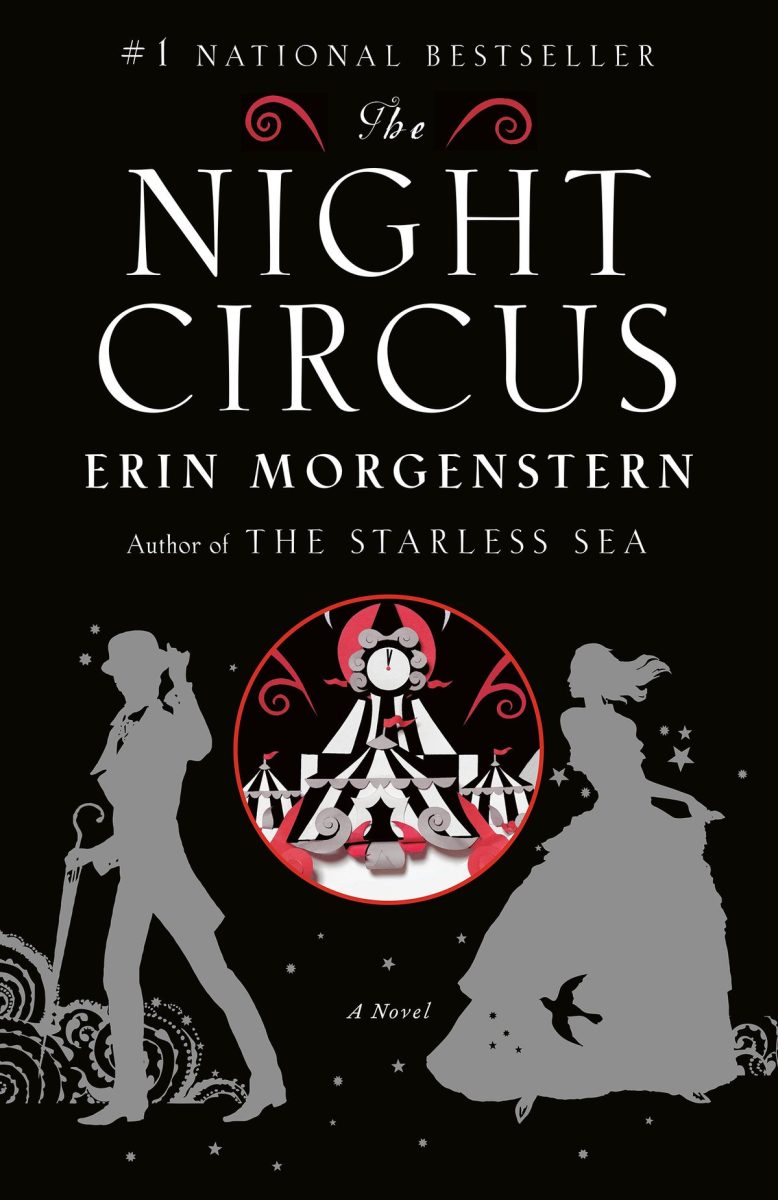




Set in the late 19th and early 20th centuries, “The Night Circus” recounts the tale of the elusive “Cirque du Rêves”, an evanescent, black and white circus that opens at nightfall and closes at dawn. This enchanting venue doubles as a battleground for a competition of sorcery between two magicians, Celia and Marco. The catch: they have no idea who their opponent is.
Having faced taxing preparation since childhood, both Celia and Marco are willing to do whatever it takes to win—until the battle of magic and illusion begins to interfere with the lives of the people they care about most. As they uncover startling truths about the nature of the game, Celia and Marco must reassess what price they are willing to pay for victory and love. This acclaimed novel was written by American author Erin Morgenstern. As of 2026, it has been translated into 37 languages and was bestowed two major literature awards: the Locus Award for Best First Novel and the Alex Award in 2012.
My own copy of “The Night Circus” is worn and torn, pages dogeared, stained with splotches of spilled beverages—bearing the signs of a well-loved book. I devoured the novel in three days the first time I read it, and not because I’m a particularly fast reader. I was utterly spellbound by the emotional chronicle of loss, love, and magic – marveling at the way the author transformed mundane objects into things of great beauty:
“Where the rim of a cauldron would be, it breaks into long strips of curling iron, as though it has been melted and pulled apart like taffy.”
The plot unfolds in an unconventional, nonlinear manner that captures the perspectives of a variety of characters and leaps between time periods. The disjointed chronology heightens the suspenseful nature of the narrative, as elements of the storyline are revealed in bits and pieces.
Erin Morgenstern’s novel is rich with lush, flowery prose, transporting the reader inside the monochrome tents of “Le Cirque du Rêves”. Reading “The Night Circus” felt more like a field trip than a collection of words on a crinkled page. I was not reading about the circus; I was experiencing it.
