









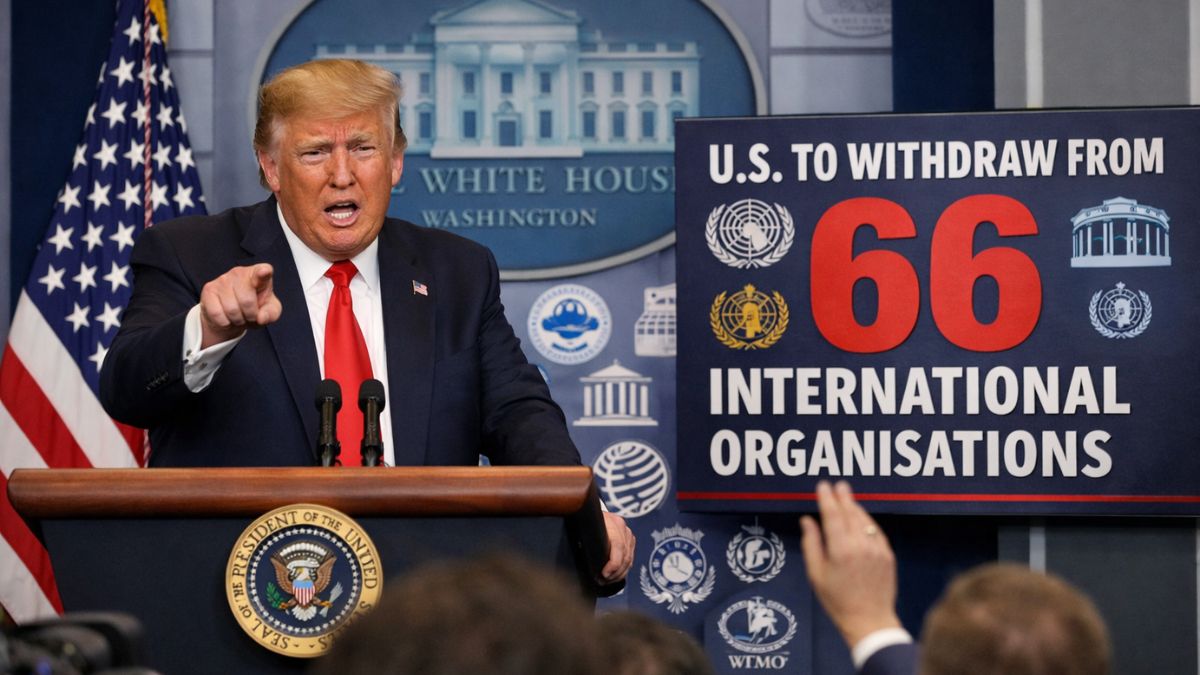















On January 7, 2026, Donald Trump, the President of the United States, signed a memorandum furthering the previously issued Executive Order 14199. This memorandum signified the United States ‘ withdrawal from sixty-six mainly United Nations (UN) affiliated international organizations, primarily those within the UN councils concerning climate change, humanitarian development, peacekeeping, and much more.
According to the White House, the United States ceased participating in and funding thirty-five non-UN organizations and thirty-one UN entities that operate contrary to the United States’ national interests, security, economic prosperity, or sovereignty. This memorandum follows an earlier review of the international organizations the United States had supported and funded.
The withdrawal was justified by the White House, which branded the aforementioned international organizations as undermining America’s independence and wasting taxpayer dollars on ineffective or hostile agendas. This decision by the Trump Administration follows previous acts to withdraw the United States from the UN and, with international efforts, most notably the United States’ withdrawal from the Paris Agreement on November 4th during Trump’s previous term, and the cessation of the United States Agency for International Development.
This executive order falls in line with President Trump’s agenda, specifically the controversial “Project 2025” and the Make America Great Again movement, which promises to prioritize America and American growth over foreign organizations. Of which many have criticized as a return to American isolationism, common during the 20’s.
Following the memorandum, nations and officials across the globe have been quick to criticize the United States. “I think what we’re seeing is the crystallization of the US approach to multilateralism, which is ‘my way or the highway,’” says Daniel Forti, head of UN affairs at the International Crisis Group, echoing worldwide sentiments of disapproval of US international policy.
The U.S. withdrawal could hinder global efforts to curb Climate Change and further disengage the US from global climate policy. International officials have also harshly criticized this decision, as it “gives other nations the excuse to delay their own actions and commitments,” said Stanford University climate scientist Rob Jackson, who chairs the Global Carbon Project, a group of scientists that tracks countries’ carbon dioxide emissions.
However, despite the recent rescission of aid and participation from the United Nations and other international organizations, United States officials have still reaffirmed their belief in the United Nations. On the 29th of December, the US has a $2 billion humanitarian funding agreement for 17 crisis-hit countries, an action followed by a warning from Trump to “adapt, shrink or die.”